EVA Foam Packaging for Electronics
Electronics packaging has two jobs at once: stop impact and stop electrostatic discharge. We build EVA foam inserts for electronics in static-dissipative (10^6–10^9 Ω) or conductive (10^3–10^5 Ω) grades, so a device is held in a formed cavity that cushions it and cannot build up a charge.
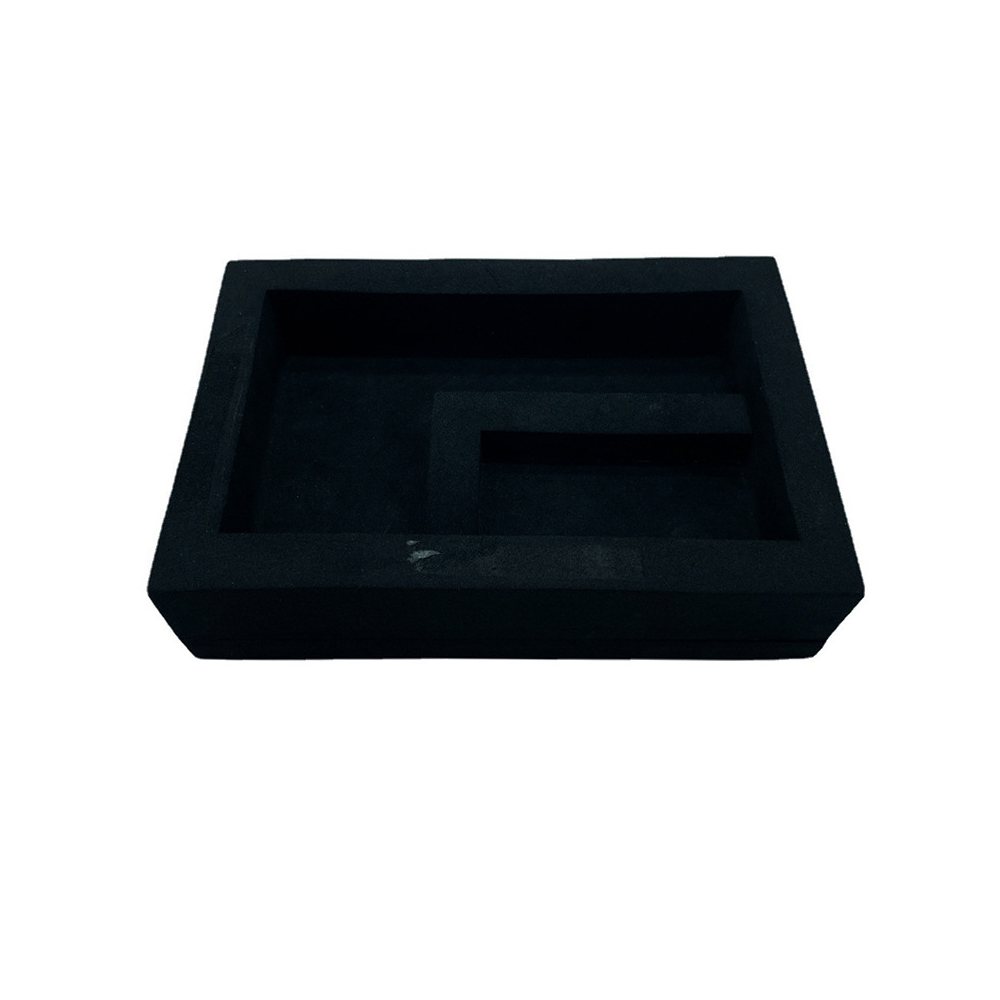
Failure modes we design against
- Impact and vibration — high-density cavities (45–60 kg/m³, or 100+ for heavy assemblies) prevent movement and absorb drops.
- Electrostatic discharge — dissipative foam bleeds charge slowly instead of holding it; conductive foam with a defined ground point for powered or sensitive assemblies.
- Scuffing and abrasion — EVA's smooth closed-cell skin will not mark housings, screens or anodised finishes.
- Contamination — closed-cell foam does not shed fibres the way open-cell foam does, and it can be wiped clean.
- Accessory management — charger, cable, adapter and manual cavities in the same insert keep a kit complete and audit-friendly.
Recommended specification
| Parameter | Recommendation |
|---|---|
| Foam grade | ESD dissipative EVA, 10^6–10^9 Ω, or standard EVA where ESD is not a concern |
| Density | 45–60 kg/m³ for hand-held devices; 100–150 kg/m³ for instruments and assemblies |
| Thickness | 20–60 mm depending on cavity depth |
| Process | CNC routing for contoured cavities; steel rule die for flat, high-volume inserts |
| Tolerance | ±0.5 mm CNC, ±0.3 mm die-cut |
| Finishing | Smooth skin; laser-engraved part numbers or logos |
| Branding | Laser engraving (fine, permanent) or silk-screen label |
| MOQ | 1 piece standard |
Common electronics insert types
See ESD EVA foam for resistivity data and grades, and quality testing for the test methods.
Get a quote and a sample for your project
Send us the dimensions, a drawing or the physical part. You will get a written DFM review, a unit price and a sample plan within 12 business hours.
Frequently asked questions
Is EVA foam safe for electronics?
Will EVA foam scratch a device screen?
Can you make an insert for a device plus accessories?
What resistivity should I specify?
Buyer specification checklist
What should I specify for the insert?
The core inputs are product size, weight, cavity depth, density, thickness and tolerance. EvaForm uses these six values to select the EVA grade and cutting route.
Which conversion process fits my part?
Die cutting is the most economical route for high-volume flat inserts. CNC routing suits multi-level cavities; molding fits deep 3D shapes.
What happens after I send a drawing?
You receive a DFM note, price and sample plan within one business day. Include quantity, colour or finish, destination port and target date.
Which standards guide the material choices?
EVA foam packaging is normally specified against ISO 9001 quality control, RoHS/REACH material compliance and UL 94 flammability classifications. These references help buyers compare suppliers on evidence rather than claims.
“Specify density, hardness and tolerance before discussing price; the rest is process selection.” — EvaForm Engineering Checklist
- ISO 9001 — quality management systems (2026 edition published 16 Sep 2026)
- EU REACH — chemical compliance
- RoHS Directive 2011/65/EU — restricted substances
- UL 94 — flammability classification