Die-Cut EVA Foam Trays
Repeat cavities stamped, heat-pressed or CNC-routed into EVA sheet — a tray that keeps a kit complete and an assembly line moving.
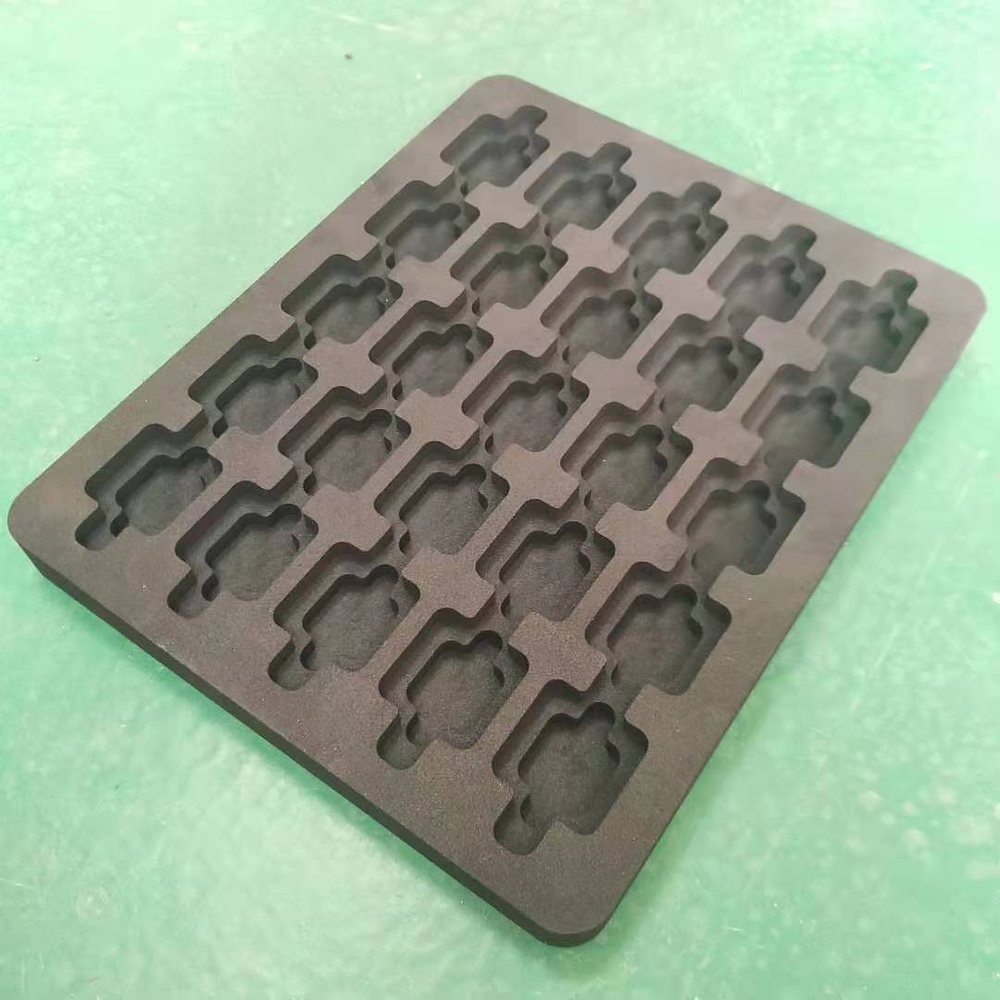
Our die-cut EVA foam trays are available in density options of 25, 38, 45, 60 and 70 kg/m³, hardness from 38 to 80 Shore C and thickness up to 200 mm. Stamping, heat-press molding and CNC routing are all available, with working temperatures from −30°C to +75°C.
Product description
A tray differs from a single-product insert in one important way: it has to repeat. Whether you are packing four bottles, twelve tool bits or a twenty-piece electronics kit, every cavity must be the same depth and the same tolerance, or the line slows down and the pack looks inconsistent. We build trays from EVA foam in densities of 25, 38, 45, 60 and 70 kg/m³, so a lightweight cosmetic tray and a heavy tool tray can use material matched to the load. Hardness spans 38 to 80 Shore C: softer grades protect glass and coated surfaces, firmer grades hold metal tools without the walls collapsing. Thickness is available from thin sheet up to 200 mm block. Three processes cover the volume range. Steel-rule stamping is fastest for flat trays at high volume and holds ±0.3 mm. Heat-press molding forms a three-dimensional tray with a consistent wall and is common for cosmetic and gift sets. CNC routing suits deep or contoured cavities and low volumes, holding ±0.5 mm with no steel tooling. Working temperature is typically −30°C to +75°C, with some tool-tray grades rated −20°C to +50°C. Functions specified by our customers include high density, high rebound, shock absorption, anti-static behaviour, flame retardance, sound insulation and anti-slip. Trays are used for electronics packaging, wine packaging and cosmetic packaging, as well as hardware kits and tea sets. We produce in Dongguan, Guangdong, China, with a 1-piece MOQ, samples in 5–7 days and mass production in 15–25 days.
Technical specifications
| Parameter | Specification |
|---|---|
| Material | EVA foam |
| Density | 25 / 38 / 45 / 60 / 70 kg/m³ options; 38–70 kg/m³ common |
| Hardness | 38–80 Shore C (common grades 38 and 55 Shore C) |
| Thickness | 0–200 mm; multi-size custom |
| Colour | Black, white and mixed colours |
| Working temperature | −30°C to +75°C (tool trays −20°C to +50°C) |
| Converting process | Stamping / die cutting, heat-press molding, CNC routing |
| Functions | High density, high rebound, Eco-friendly, shock absorption, anti-static, flame retardant, sound insulation, anti-slip |
| Applications | Electronics, wine, cosmetics packaging; hardware and tool boxes |
| Printing / logo | Available |
| Origin | Dongguan, Guangdong, China |
| Brand | Wenhong / EVA |
| MOQ | 1 piece standard |
Typical tray constructions
| Construction | Typical grade | Best for |
|---|---|---|
| Stamped flat tray | 38 kg/m³, 38 Shore C | Flat kit trays and retail inserts |
| Heat-pressed tray | 38 kg/m³, 55 Shore C | Three-dimensional cosmetic and gift trays |
| CNC-routed tray | 38–70 kg/m³, 38 Shore C | Deep or contoured cavities, low volume |
| High-density tool tray | 70 kg/m³, 55–80 Shore C | Heavy tools and instruments |
Applications and features
Ordering and customisation
- Layout: send a DXF/DWG or a sample tray; we propose cavity spacing and wall thickness.
- Process choice: stamping for flat volume, heat-press for 3D form, CNC for depth and prototypes.
- Density choice: 25–38 kg/m³ for light goods, 45–70 kg/m³ for tools and instruments.
- Finishes: smooth, flocked, two-tone and printed logo options.
- Tolerance: ±0.3 mm stamped, ±0.5 mm CNC, confirmed on the approved sample.
- Quality: ISO 9001:2015 factory with RoHS and REACH declarations.
Get a quote and a sample for your project
Send us the dimensions, a drawing or the physical part. You will get a written DFM review, a unit price and a sample plan within 12 business hours.
All 4 products in this category
Finished trays and semi-finished inserts that hold a product and its accessories in fixed positions during shipping and display.
4 products
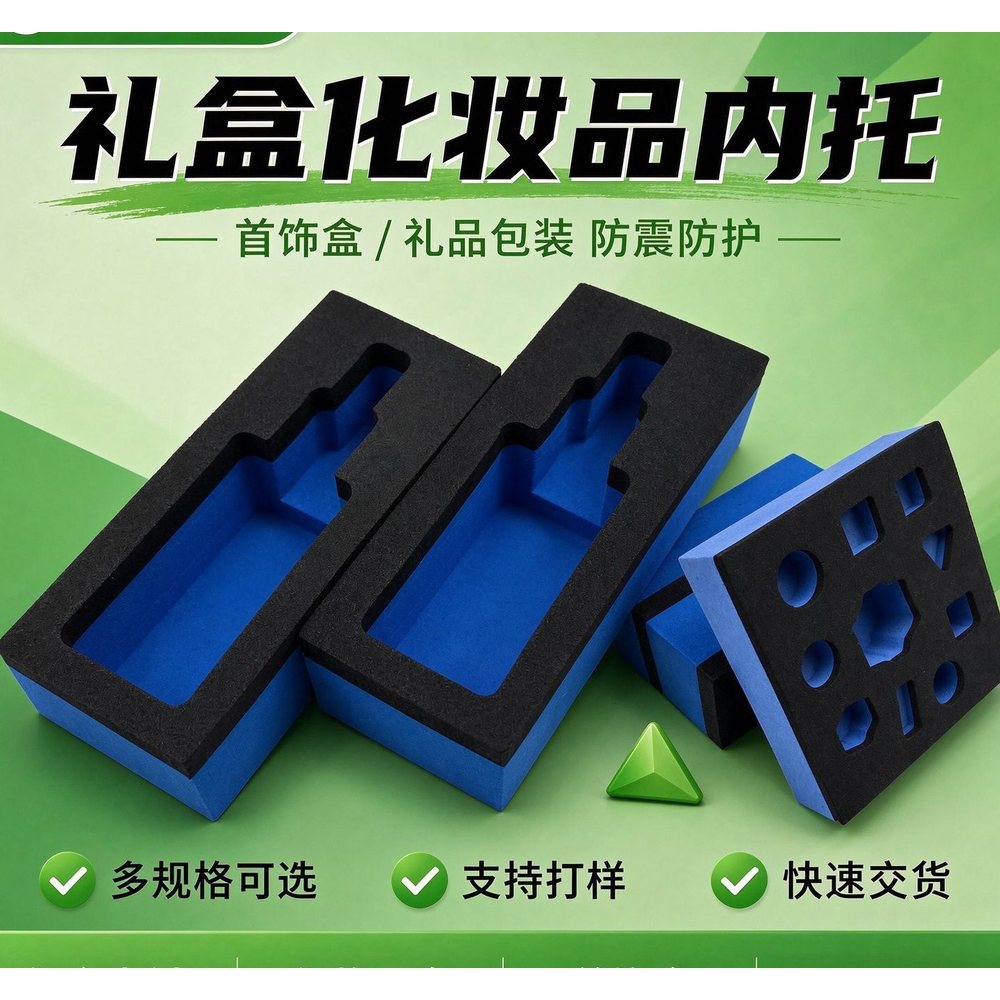
Carved EVA Foam Insert for Gift & Jewellery Boxes
A press-formed EVA insert for gift boxes, jewellery cases and cosmetics, available in five densities and a wide hardness range.
View product →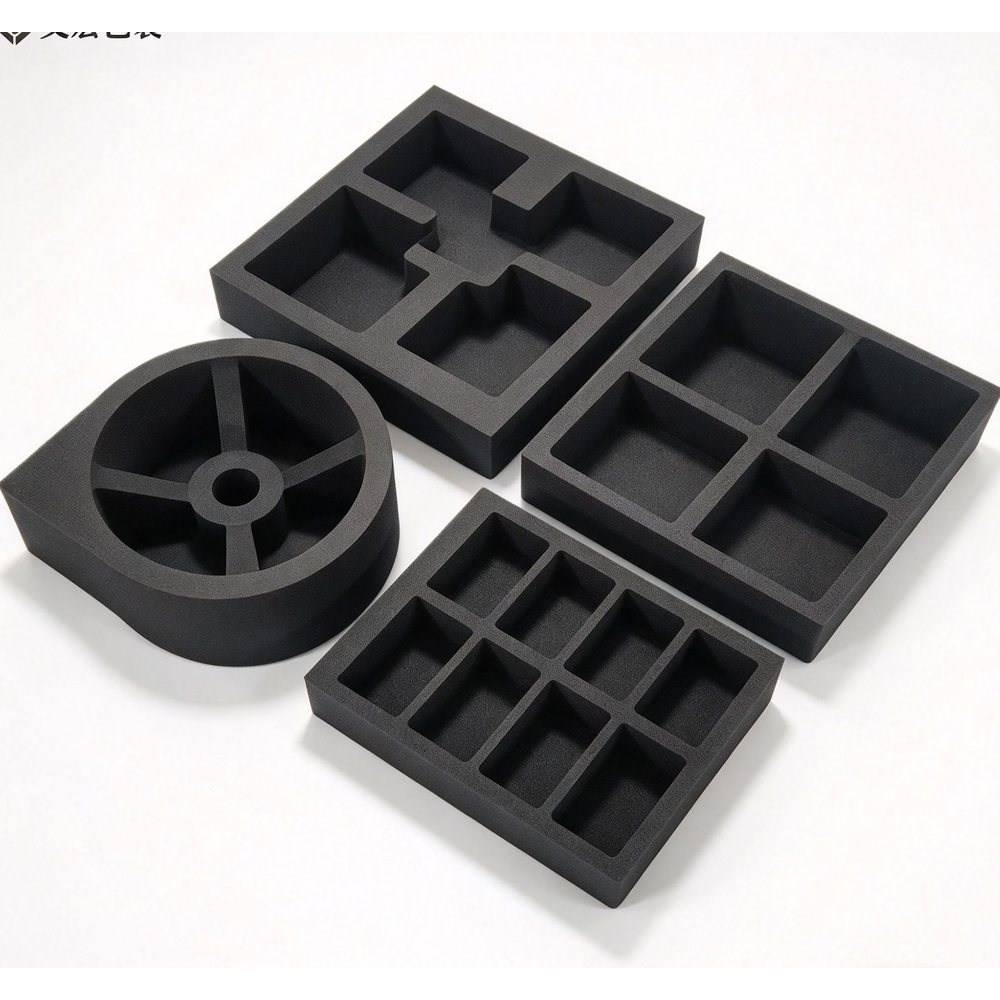
High-Density Anti-Static EVA Foam Insert
A soft 15 Shore C anti-static EVA insert formed by wire cutting, made for bag and case padding where delicate contents need gentle, charge-safe support.
View product →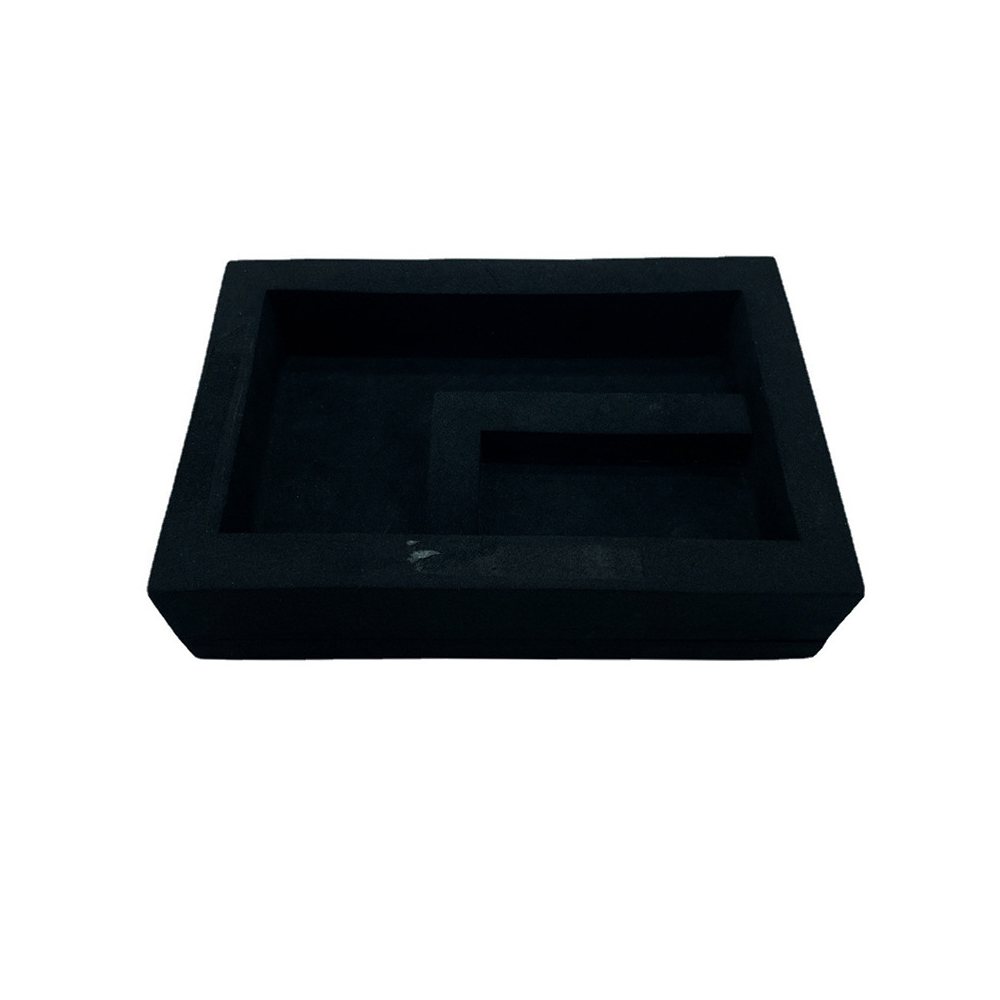
High-Density EVA Protective Insert Tray
A custom EVA foam tray built to absorb drops and collisions, supplied as a semi-finished insert for products that need dense, dependable protection.
View product →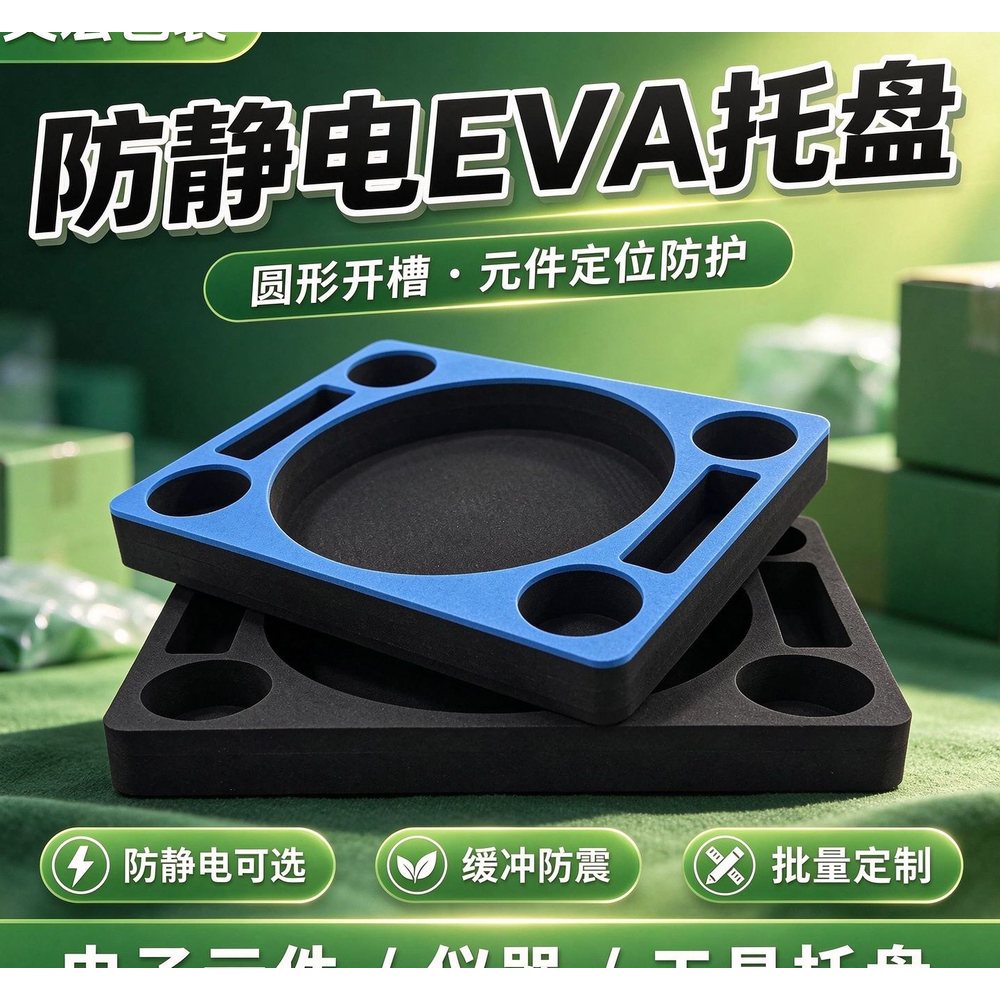
Shaped Flocked EVA Anti-Static Insert Tray
An irregular carved EVA tray with a flocked surface and anti-static performance, combining a premium presentation finish with shock and moisture protection.
View product →Frequently asked questions
What is the minimum order quantity?
What are the lead times for samples and production?
Can you make the product to our drawing or sample?
Which density should I use for a tool tray?
What is the difference between stamping, heat-pressing and CNC routing?
Can you make anti-static and flame-retardant trays?
What should buyers check when specifying EVA foam tray supplier?
Buyer specification checklist
What should I specify for the insert?
The core inputs are product size, weight, cavity depth, density, thickness and tolerance. EvaForm uses these six values to select the EVA grade and cutting route.
Which conversion process fits my part?
Die cutting is the most economical route for high-volume flat inserts. CNC routing suits multi-level cavities; molding fits deep 3D shapes.
What happens after I send a drawing?
You receive a DFM note, price and sample plan within one business day. Include quantity, colour or finish, destination port and target date.
Which standards guide the material choices?
EVA foam packaging is normally specified against ISO 9001 quality control, RoHS/REACH material compliance and UL 94 flammability classifications. These references help buyers compare suppliers on evidence rather than claims.
“Specify density, hardness and tolerance before discussing price; the rest is process selection.” — EvaForm Engineering Checklist
- ISO 9001 — quality management systems (2026 edition published 16 Sep 2026)
- EU REACH — chemical compliance
- RoHS Directive 2011/65/EU — restricted substances
- UL 94 — flammability classification